
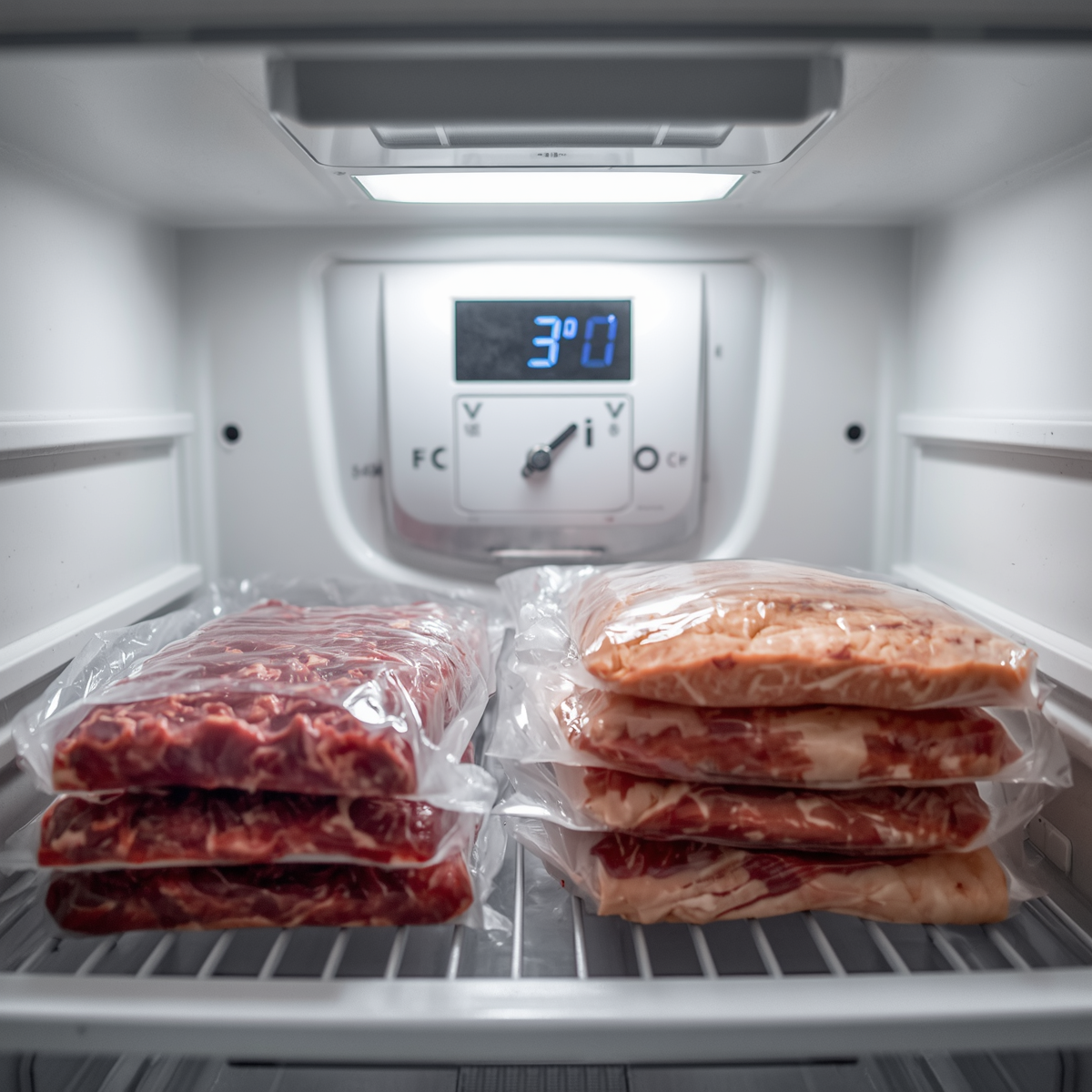
Proper storage isn’t just about food safety—it’s about preserving the texture, flavor, and nutritional value that you paid for. In this guide, we’ll show you exactly how to handle your meat from the moment it arrives until it hits the pan.
1. The Cold Chain: Don’t Break the Link
The most important rule of meat storage is temperature control. Bacteria that cause spoilage thrive in the “Danger Zone” (between 4°C and 60°C).
- Action Step: As soon as your delivery arrives, place it in the refrigerator. Your fridge should be set to 4°C (40°F) or lower.
- Pro Tip: Store your meat on the bottom shelf. This is usually the coldest part of the refrigerator, and it prevents any accidental juices from dripping onto other foods.
2. Keep It Air-Tight
Oxygen is the enemy of freshness. When meat is exposed to air, it begins to oxidize, which can change its color from a vibrant red to a dull brown and affect the flavor.
- Vacuum Sealing: If your order arrives vacuum-sealed, leave it that way! Vacuum packaging is the gold standard for freshness as it removes all oxygen.
- Re-wrapping: If you’ve opened a package but aren’t cooking the whole portion, wrap the leftovers tightly in plastic wrap, followed by a layer of foil or an airtight container.
3. Respect the Clock: Storage Timelines
Even in a cold fridge, fresh meat has a limited window where it tastes its best. Here is a quick cheat sheet for your Freshh Meat products:
- Ground Meat & Poultry: These are the most sensitive. Plan to cook them within 1 to 2 days.
- Steaks, Chops, and Roasts: These denser cuts stay fresh for 3 to 5 days.
- Organ Meats: Should be consumed within 1 day for maximum quality.
4. Freezing for the Future
If you don’t plan on eating your meat within the windows mentioned above, the freezer is your best friend.
- Avoid Freezer Burn: To prevent those dry, icy patches, ensure the meat is wrapped as tightly as possible with zero air pockets.
- Labeling: Use a permanent marker to write the date and the type of cut on the package.
- Duration: While frozen meat is safe indefinitely, it tastes best if consumed within 4 to 6 months (for beef) or 9 months (for whole poultry).
5. The Golden Rule of Thawing
The way you thaw your meat is just as important as how you store it. Never thaw meat on the kitchen counter at room temperature. This invites bacteria to grow on the outside while the inside is still frozen.
- The Best Way: Thaw slowly in the refrigerator. Place the meat on a plate the night before you plan to cook.
- The Fast Way: If you’re in a hurry, place the airtight package in a bowl of cold water, changing the water every 30 minutes.