
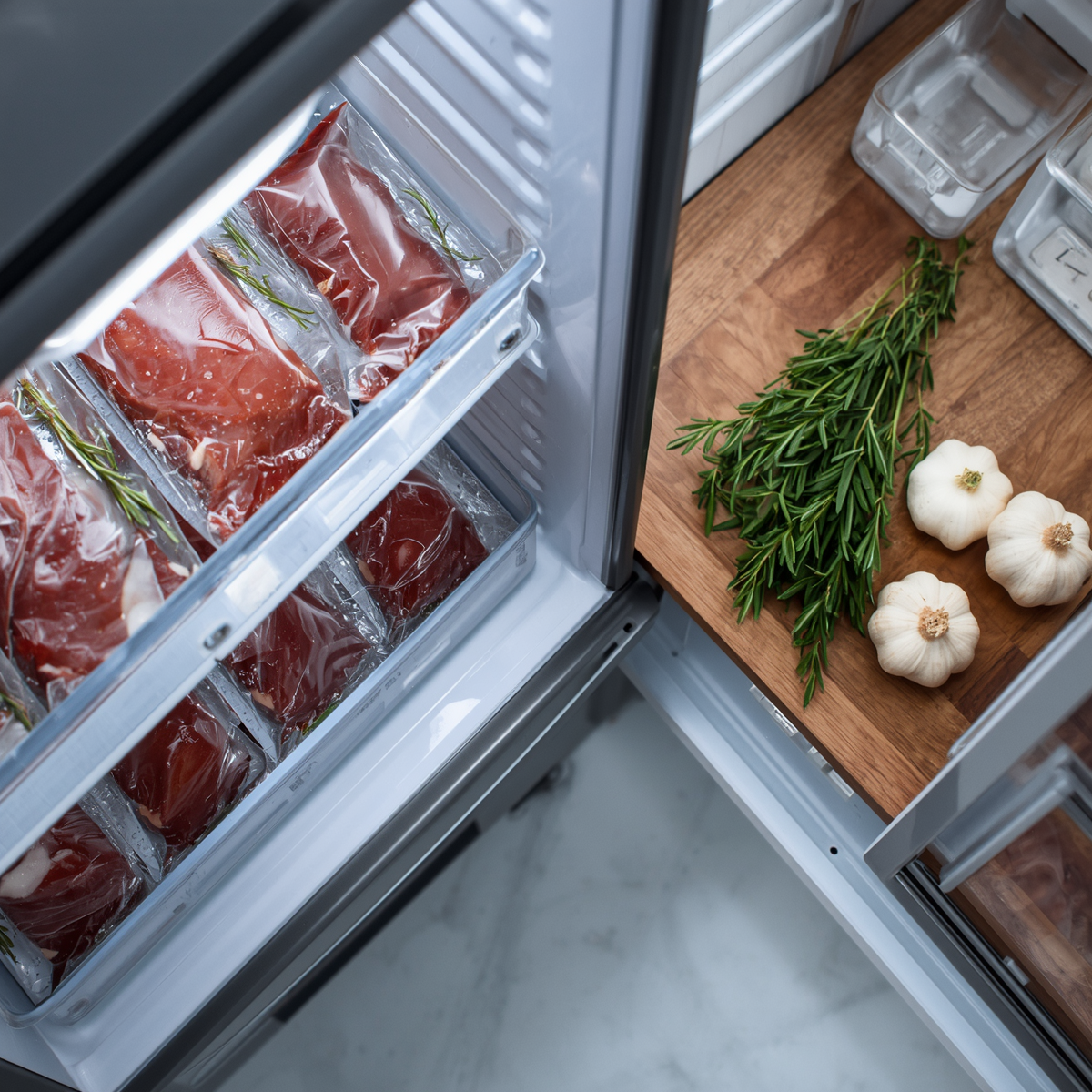
You’ve done the hard part—you’ve sourced the highest quality, premium cuts from Freshh Meat. Now, the secret to a world-class meal lies in how you handle that meat once it enters your kitchen. Proper storage is the bridge between a “good” meal and a “gourmet” experience.
In this guide, we will walk you through the essential steps of safe meat storage to ensure every bite you take is as fresh as the day it was butchered.
1. The “Golden Hour” of Meat Delivery
Food safety starts the moment your package arrives. Bacteria that cause spoilage thrive in the “Danger Zone”—between 4°C and 60°C.
- The Rule: Never leave fresh meat at room temperature for more than one hour.
- Action: As soon as you receive your Freshh Meat order, transfer it immediately to the coldest part of your refrigerator.
2. Master the Refrigerator Layout
Did you know that not all spots in your fridge are created equal?
- The Bottom Shelf is King: Always store raw meat on the lowest shelf. Why? Because it is typically the coldest area. More importantly, this prevents any accidental juices from dripping onto other foods like vegetables or cooked leftovers, eliminating the risk of cross-contamination.
- Avoid the Door: Never store meat in the refrigerator door. The temperature there fluctuates every time you open the fridge, which can accelerate spoilage.
3. The Science of Packaging
At Freshh Meat, we provide expertly handled cuts, but how you keep them wrapped matters.
- Vacuum Sealing: If your meat is vacuum-sealed, do not open it until you are ready to cook. Vacuum sealing removes oxygen, which is the primary cause of meat turning brown (oxidation).
- Original Packaging: If not vacuum-sealed, keep the meat in its original store wrap. If you must re-wrap it, use airtight containers or heavy-duty plastic wrap to minimize exposure to air.
4. Knowing Your Timelines
Freshness has a window. To enjoy the peak flavor of your Freshh Meat selection, follow these storage durations:
- Ground Beef & Poultry: Use within 1–2 days.
- Steaks, Chops, & Roasts: Use within 3–5 days.
- Freezing: If you won’t cook it within these timeframes, freeze it immediately. Wrapped properly, beef can stay high-quality in the freezer for up to 6 months.
5. Thawing: The Right Way vs. The Fast Way
The way you thaw meat determines its final texture.
- The Best Way (Fridge): Thaw slowly in the refrigerator. This keeps the meat at a safe temperature throughout the process and preserves the cellular structure for a juicier result.
- The Safe “Fast” Way (Cold Water): If you’re in a rush, place the airtight package in a bowl of cold water. Change the water every 30 minutes. Never use hot water, as this starts to “cook” the outside while the inside is still frozen.